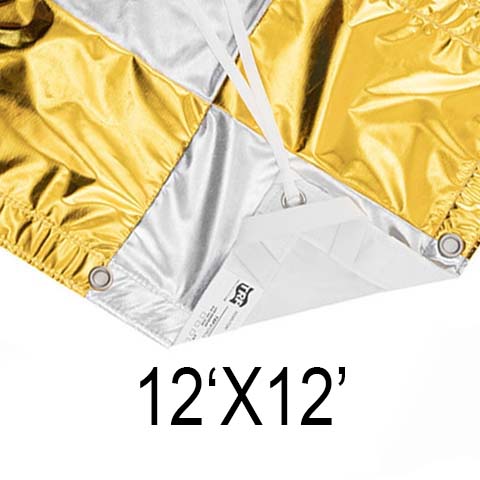
n professional film lighting, few tools deliver as much control per setup time as a 12×12 checkerboard silver/gold reflector. This is not a decorative accessory or a “nice-to-have” grip item — it is a core light-shaping surface used daily on commercial, feature, and high-end TV productions where speed, consistency, and repeatability matter.
The checkerboard silver/gold pattern is specifically designed to balance two extremes:
the raw punch and contrast of silver with the warmth and skin-friendly tone of gold. At a 12×12 size, this balance scales up to a level suitable for wide shots, exterior daylight control, large interiors, and controlled key light augmentation without introducing the overly orange cast associated with full gold reflectors.
What the 12×12 Checkerboard Actually Does on Set
Unlike white or soft silver fabrics, the checkerboard surface produces a directional yet natural reflection. The alternating silver and gold squares blend optically at distance, resulting in:
-
Neutral highlights with subtle warmth
-
Controlled contrast without harsh specularity
-
Skin tones that hold color accuracy under mixed lighting
-
A reflection that reads “cinematic” rather than “reflector obvious”
At 12×12, the reflector becomes a large-scale lighting source, not a bounce toy. It can effectively act as:
-
A daylight key enhancer
-
A motivated sun return
-
A fill source for wide master shots
-
A beauty reflector for large talent groups
This size is commonly used when smaller 4×4 or 6×6 frames simply disappear in the scene or lack output.
Silver/Gold vs Pure Silver or Gold
Pure Silver
-
Maximum output
-
Harder highlights
-
Can feel clinical or aggressive on skin
Pure Gold
-
Strong warmth
-
Often too saturated for modern digital sensors
-
Risk of “sunburn” skin tones
Checkerboard Silver/Gold
-
Balanced warmth without color pollution
-
Higher output than white or soft silver
-
Modern sensor-friendly color reproduction
-
Preferred for high-resolution digital cinema cameras
This is why checkerboard fabrics remain a staple on sets shooting with ARRI, RED, Sony Venice, FX9, FX6, and high-end mirrorless cinema builds.
Practical Use Cases
Exterior Daylight
-
Returning sun into faces without over-warming
-
Lifting shadows under hats, brows, or harsh overhead sun
-
Maintaining contrast while improving exposure
Interior Large Sets
-
Simulating motivated window light
-
Creating soft but directional fill
-
Enhancing practicals or bounced HMI sources
Commercial & Beauty Work
-
Clean highlights on skin
-
Natural warmth without makeup compensation
-
Consistent look across multiple setups
Narrative & TV Drama
-
Matching daylight continuity
-
Speeding up lighting changes
-
Maintaining visual coherence across wide shots
Why 12×12 Matters for Professional Crews
A 12×12 frame is the point where grip tools stop being “portable accessories” and start becoming lighting architecture.
Advantages:
-
Covers multiple actors in a single reflection
-
Reads on wide lenses and moving camera shots
-
Allows greater throw distance
-
Works efficiently with cranes, jibs, and stabilized rigs
It is the standard size requested by:
-
Gaffers on commercial shoots
-
Key grips on narrative productions
-
DPs working with natural light control strategies