

Film Fixer & Local Producer in Thailand
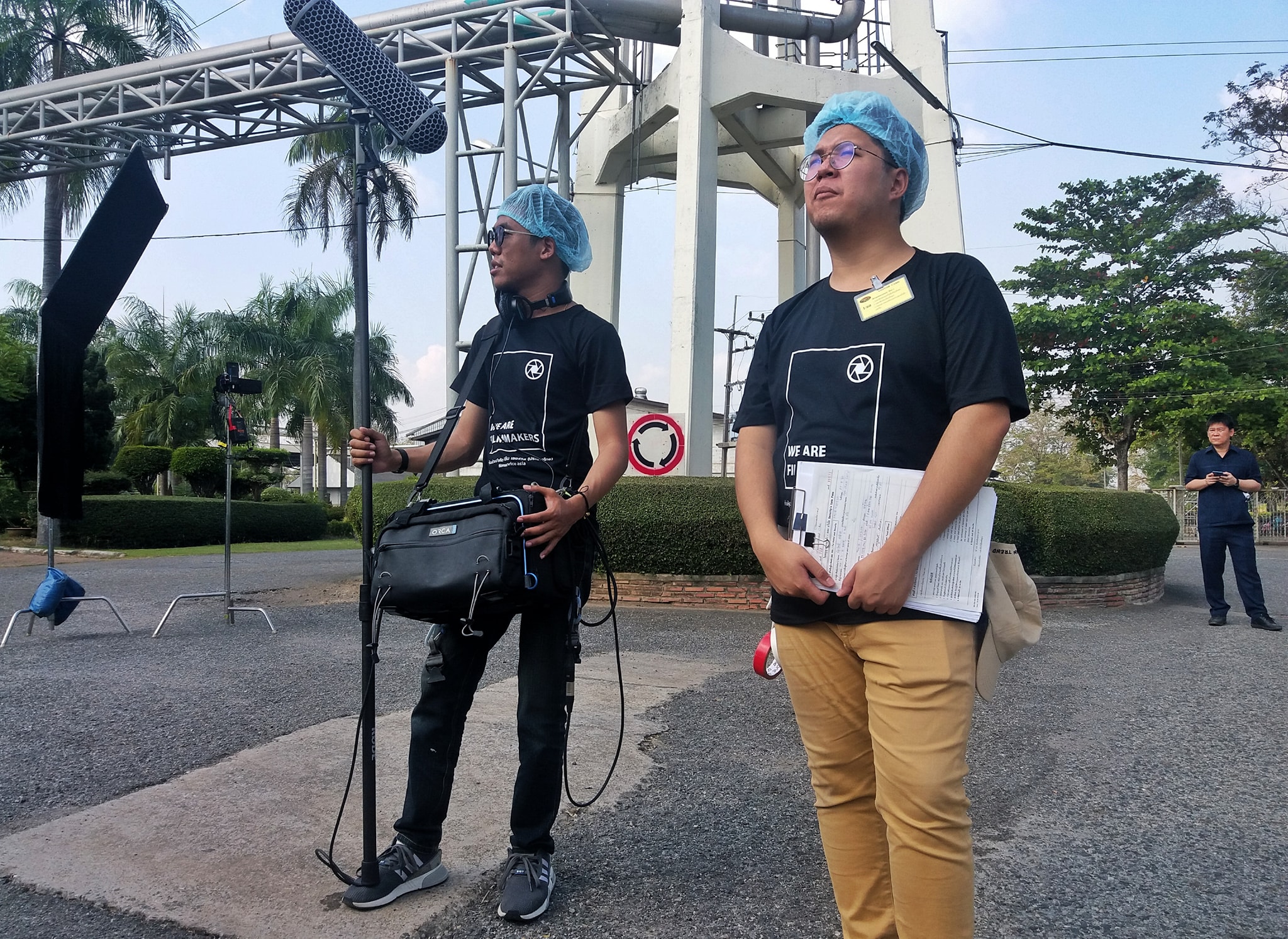
A film fixer or local producer in Thailand plays a fundamental role in the success of any international production, not simply as a support function but as a central operational bridge between creative intention and physical execution, ensuring that every stage of the filmmaking process — from early development, location scouting, and technical planning through to on-set coordination and final wrap — is translated accurately into the realities of working within a local environment where language, regulations, infrastructure, and production culture all operate under their own logic and timing. In practice, this role exists precisely at the intersection of creative ambition and logistical reality, where decisions made in pre-production must be continuously adapted to local conditions without compromising the integrity of the original vision, and where time, access, permissions, and human coordination become as important as camera choices or lighting design. In Thailand, the role of a professional film fixer naturally expands far beyond a single definition, often combining what in larger production systems would be separate departments such as production coordination, location management, line production, and local fixing into one integrated responsibility structure, where a Thailand production fixer or Bangkok fixer is expected not only to solve problems but to anticipate them, and not only to execute instructions but to interpret creative intent in a way that aligns with what is practically achievable on the ground. This requires a level of contextual understanding that goes beyond language or translation, because filmmaking in real environments is never purely technical — it is always a negotiation between time, space, people, and expectation, and the fixer becomes the point at which all of these elements converge into a workable production plan. At Film Service (Bangkok), our fixers operate as production coordinators embedded directly within the production workflow, responsible for assembling and managing camera crews at precisely the right time and in the correct locations, while ensuring that each department involved — whether camera, lighting, art, or production support — is matched not only in terms of availability but also in terms of technical capability, working style, and project-specific requirements, because a high-end commercial shoot, a documentary, and a branded content campaign may all require fundamentally different approaches even when they are taking place in the same city. This coordination extends across Thailand, where freelance camera operators, cinematographers, gaffers, grips, and technical specialists are integrated into production teams through established networks that allow us to build crews that function as unified systems rather than disconnected individuals.
Beyond crew assembly, the operational scope of a fixer in Thailand extends into the core infrastructure of production itself, including permit acquisition and negotiation with local authorities, coordination with municipal and governmental bodies responsible for filming permissions, customs and immigration facilitation for incoming equipment, and detailed location management that covers not only the selection of spaces but also access logistics, timing restrictions, environmental conditions, and on-the-ground control during shooting days, all of which must be handled in advance to ensure that production schedules remain stable once filming begins. In parallel, fixers are also responsible for casting and local talent acquisition, transport planning for both crew and equipment, accommodation coordination for extended shoots, and the continuous management of logistical variables that would otherwise fragment the production process into multiple disconnected systems.While the term “fixer” is widely used in international production language, within professional filmmaking environments the more accurate and operationally meaningful descriptions are often production coordinator or local producer, because the actual scope of responsibility extends well beyond translation, assistance, or facilitation, and instead involves full integration into the production structure itself, where the fixer becomes accountable for ensuring that decisions made by directors, producers, and cinematographers are not only understood locally but fully executable within the constraints of the environment, timeline, and available resources. This distinction is critical, because it separates casual or freelance support roles from structured production systems capable of carrying responsibility for complex international shoots.
In this context, experience becomes the defining factor that separates an effective fixer from a basic coordinator, because filmmaking is not a linear process but a constantly shifting environment where weather, access, permissions, technical limitations, and human factors interact in real time, requiring someone who not only understands how production works in theory but has repeatedly navigated the unpredictable realities of actual shoots, where solutions often need to be found within minutes rather than hours, and where communication breakdowns, location changes, or technical constraints must be resolved without disrupting the overall production flow. A strong fixer in Thailand therefore operates as both a planner and a problem solver, capable of maintaining structure while adapting dynamically to changing conditions. Equally important is the network dimension of the role, because production in Thailand relies heavily on established professional relationships across crew, equipment houses, location owners, and local authorities, and it is through these connections that experienced fixers are able to secure locations, negotiate access, assemble reliable teams, and coordinate equipment efficiently even under tight deadlines, creating a production environment where decisions can be executed quickly and with confidence rather than delayed by uncertainty or administrative friction. Over time, these relationships form an ecosystem of trust that directly benefits international productions, allowing them to operate at a level of efficiency that would be difficult to achieve without local integration.
Ultimately, the role of a film fixer or local producer in Thailand is not defined by a single task but by the ability to unify multiple production layers into one coherent system, where logistics, creativity, communication, and execution all function in alignment, allowing directors and producers to remain fully focused on storytelling and visual outcomes while the operational structure beneath them remains stable, responsive, and continuously adapted to the realities of production on the ground. In this sense, the fixer is not an auxiliary role but a structural necessity in any serious international production taking place in Thailand, ensuring that what begins as an idea or a script can successfully become a fully realized cinematic or commercial outcome within a complex and fast-moving production environment.
A truly experienced fixer in Thailand is defined not only by language ability, but by deep local knowledge, long-standing industry relationships, and the ability to anticipate production challenges before they occur, because filmmaking in real environments is rarely predictable and often depends on rapid problem-solving, strong communication networks, and immediate access to alternative solutions when plans inevitably change on set.
COMMON SENSE
in production terms refers to the ability of a fixer to interpret creative intent correctly and translate it into actionable instructions for local crews and authorities, ensuring that nothing is lost in translation between the director’s vision and the execution on set, while also adapting that vision to local conditions in a way that preserves both efficiency and creative integrity.
CONNECTIONS
represent one of the most critical assets in film production in Thailand, because many logistical challenges are resolved not through formal systems but through established professional relationships built over years of working within the industry, allowing experienced fixers to secure locations, permissions, crew availability, and resources quickly and reliably even under tight production timelines.
COMMITMENT
is another defining factor, as the role of a fixer is not limited to office coordination but extends directly onto set, often requiring long hours, immediate response to production changes, and continuous support throughout the shooting process, where the stability of the entire production often depends on the fixer’s ability to remain fully engaged and responsive at all times.
ORGANISATIONAL SKILLS
are essential because a production fixer must manage multiple parallel workflows simultaneously, including scheduling, transport logistics, crew coordination, equipment movement, and location readiness, all while maintaining alignment with the production timeline and ensuring that no department is left without the information or resources it needs at any given moment.
TRAVEL MANAGEMENT SKILLS
also form a core part of the role, particularly in international productions where equipment, cast, and crew may be arriving from different countries and must be coordinated through customs, transport hubs, and local logistics systems in a way that ensures everything arrives on time and in working condition at the correct location.
KNOWLEDGE OF LOCAL FILMING AREAS
is not simply an advantage but a requirement, because understanding how locations behave in real production conditions — including access routes, weather patterns, crowd movement, light behavior, and local restrictions — allows a fixer to anticipate issues before they affect the shooting schedule and to provide alternative solutions without delaying production.
TENACITY
is often what differentiates experienced production fixers from standard coordinators, because filmmaking in real environments is unpredictable by nature, and the ability to persist, adapt, negotiate, and solve problems under pressure is what ensures that production continues moving forward even when unexpected challenges arise.
PRODUCTION EXPERIENCE
is essential because a fixer must understand not only logistics but also the creative and technical requirements of filmmaking, including how different departments interact on set, how schedules are structured, and how decisions made in pre-production directly impact shooting efficiency and final output.
UNDERSTANDING CLIENT NEEDS
is equally important, as international productions often require a balance between creative ambition and practical feasibility, and a skilled fixer must be able to interpret client expectations while maintaining clear communication between production teams, ensuring that all parties remain aligned throughout the project.
NEGOTIATION AND FINANCIAL MANAGEMENT SKILLS
are also central to the role, since production in Thailand involves continuous coordination of costs related to locations, crew, equipment, transport, catering, and accommodation, where effective negotiation and budget control directly translate into more efficient use of time and resources on set.
KNOWLEDGE OF FILMING LAWS AND PERMITTING SYSTEMS
in Thailand is fundamental, as all productions must comply with national regulations and local authority requirements, and an experienced fixer ensures that all permits, permissions, and legal processes are secured in advance so that production can proceed without interruption or legal risk.
Ultimately, a film fixer in Thailand is not simply a support role but a central production function that directly influences the efficiency, safety, and creative freedom of any international shoot, ensuring that all logistical, legal, and operational elements are handled seamlessly so that the production can focus entirely on storytelling and visual execution.

HOW A FIXER IMPROVES YOUR PRODUCTION
A professional fixer in Thailand improves production not only by solving problems but by preventing them from occurring in the first place, using experience, location knowledge, and established industry networks to secure unique filming environments, coordinate reliable crews, and provide accurate production feedback that allows producers and directors to make informed decisions quickly and confidently.
Their understanding of Thailand’s production landscape — from hidden locations and controlled access sites to legal procedures, permitting systems, language barriers, and technical requirements — allows international teams to operate with a level of efficiency that would otherwise be impossible without local expertise, especially when working under tight schedules or complex logistical conditions.
Over time, experienced production fixers develop extensive networks of trusted collaborators, including camera crews, lighting technicians, production designers, and equipment suppliers, which allows them to assemble fully functional film teams rapidly and reliably, ensuring that every production benefits from both technical quality and operational stability.
In many cases, productions that arrive in Thailand for the first time are surprised by how seamlessly experienced local crews operate, particularly when supported by established fixer networks that already understand each other’s workflows, equipment standards, and communication styles, creating a production environment that feels unified rather than fragmented.
This extends into equipment coordination as well, where long-standing relationships with rental houses in Bangkok and across Thailand allow production fixers to secure competitive rates, reliable availability, and properly tested camera, lighting, and grip packages that are prepared and configured specifically for each production’s requirements, ensuring that equipment is not just delivered, but production-ready.
Ultimately, the role of a fixer in Thailand is to transform complexity into clarity, allowing international productions to focus entirely on creative execution while all local operational elements are handled with precision, experience, and full understanding of both global production standards and Thailand’s unique filmmaking environment.