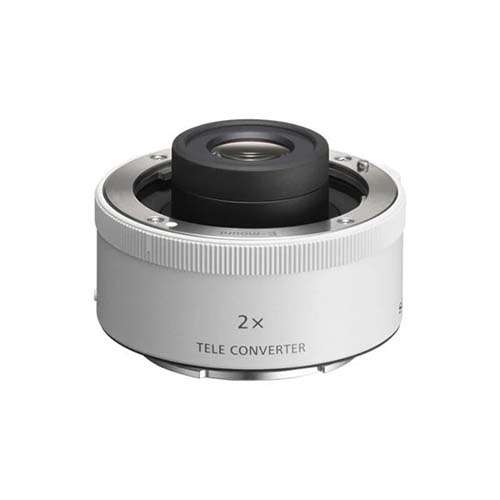
The Sony SEL20TC 2.0x Teleconverter is a deceptively small piece of gear that can completely change how a wildlife, sports, event, or long-lens production works in the field. On paper, it’s simple: it doubles focal length. In practice, for the right Sony telephoto lenses, it turns an already capable setup into a far more flexible long-reach system without the size, weight, or cost of carrying a second super-telephoto lens.
For productions in Thailand — where crews may move between Bangkok stadiums, motorsport events, golf tournaments, wildlife reserves, beachside ceremonies, or long-lens documentary coverage — the Sony 2X Teleconverter (SEL20TC) is one of the smartest accessories you can add to a Sony telephoto package.
This is not a generic adapter. It is a native Sony E-mount 2.0x teleconverter, engineered specifically for compatible Sony telephoto lenses, preserving full electronic communication, autofocus support (depending on body/lens conditions), and professional optical behavior within Sony’s ecosystem. Sony states it doubles focal length with a 2-stop light loss and is designed to maintain G Master-level performance on compatible lenses. It weighs just 207 g, making it a compact alternative to carrying another large telephoto optic.
What the SEL20TC Actually Does
The concept is straightforward:
A 2.0x teleconverter multiplies the focal length of the attached lens by two.
Examples:
-
70–200mm becomes 140–400mm
-
100–400mm becomes 200–800mm
-
200–600mm becomes 400–1200mm
-
400mm prime becomes 800mm
-
600mm prime becomes 1200mm
That extra reach matters enormously when you physically can’t move closer — which is exactly what happens in sports, wildlife, stage events, aerial coverage, and long-lens documentary work.
The trade-off is also straightforward: you lose 2 stops of light. Sony explicitly notes the SEL20TC multiplies focal length by 2x with a 2-stop light loss.
That means:
-
f/2.8 becomes f/5.6
-
f/4 becomes f/8
-
f/5.6 becomes f/11
For bright daylight work in Thailand, that trade is often perfectly acceptable. For dusk wildlife or low-light indoor sports, you need to think more carefully.
Built for Sony’s Long-Lens Ecosystem
The biggest advantage of the SEL20TC is that it’s not a third-party compromise. It’s designed to integrate directly with Sony’s high-end telephoto lens system.
Sony describes it as a 2x teleconverter that maintains full G Master performance and retains optical quality and operability on supported lenses.
This matters because cheap teleconverters often introduce:
-
noticeable softness
-
AF hesitation
-
reduced contrast
-
edge degradation
-
unpredictable communication with the camera body
The SEL20TC is built to avoid that. It is intended for professionals who need more reach without breaking the Sony workflow.
Ideal Lens Pairings for Rental Use
For your rental clients in Thailand, the most practical and in-demand pairings are:
Sony 70–200mm f/2.8 GM / GM II
Turns into a 140–400mm f/5.6 equivalent tool.
This is extremely useful for:
-
field sports
-
stage coverage
-
outdoor events
-
compressed commercial shots
-
wildlife on a lighter setup
Sony 100–400mm GM
Sony’s official specs list the SEL100400GM as compatible with the SEL20TC. With the teleconverter attached, it becomes a 200–800mm setup, which is extremely powerful for wildlife and outdoor sports.
Sony 200–600mm G OSS
Sony’s official specs list the SEL200600G as compatible with the SEL20TC. That means a highly portable rental setup can become a 400–1200mm reach monster without carrying a dedicated super-telephoto prime.
Sony 400mm f/2.8 GM OSS
Sony’s SEL20TC product pages list the FE 400mm F2.8 GM OSS among compatible products, creating an 800mm f/5.6 class setup for elite sports and wildlife work.
Sony 600mm f/4 GM OSS
Sony’s official specs for the SEL600F40GM confirm compatibility with the SEL20TC, turning it into a 1200mm f/8 setup for serious wildlife and specialist long-range work.
Why It Makes Sense in Thailand
Thailand is a place where long-lens work often happens under good light:
-
wildlife parks and reserves
-
birding and nature work
-
beach and marine exteriors
-
golf and motorsport
-
festivals and public ceremonies
-
outdoor fashion/editorial compression shots
-
rooftop or skyline coverage in Bangkok
In these scenarios, a 2x teleconverter is often more practical than carrying another full lens. International crews flying into Thailand especially benefit from this. Airline weight limits, carnet logistics, and limited baggage make the SEL20TC one of those accessories that saves more money and stress than its size suggests.
Compact, Fast, and Easy to Add to Any Kit
At only 207 g, the SEL20TC is genuinely lightweight. Sony markets it as a compact alternative to bulky additional lenses, and that’s exactly the correct way to think about it.
It’s the kind of item you can:
-
keep in the lens pouch
-
throw in a wildlife bag
-
carry in a small event kit
-
add to a sports package without changing transport planning
For rental clients, that makes it an easy upsell and a highly useful add-on to telephoto packages.
Best Use Cases
The Sony SEL20TC is ideal for:
-
Wildlife filming in Thailand
-
Sports photography and sports video
-
Golf, motorsport, sailing, and outdoor events
-
Birding and nature documentaries
-
Long-lens corporate stage coverage
-
Live performance and concert coverage
-
Run-and-gun travel productions needing extra reach
It’s especially strong when paired with Sony FX6, Sony FX3, Sony A1, Sony A7S III, and Sony A9-series bodies.
Why Rent the SEL20TC Locally in Thailand
Renting locally from Film Service Thailand means:
-
No need to travel with extra long-lens accessories
-
Easy pairing with Sony telephoto lenses already in our inventory
-
Tested compatibility with rental bodies and lenses
-
Immediate replacement options if needed
-
Daily and weekly rental rates
-
Pickup in Bangkok or delivery nationwide
For international photographers, wildlife filmmakers, and sports crews shooting in Thailand, the Sony SEL20TC is one of the most practical small accessories you can add to your lens package.
It doesn’t look dramatic on a shelf.
But on the right lens, in the right light, it changes the shot.