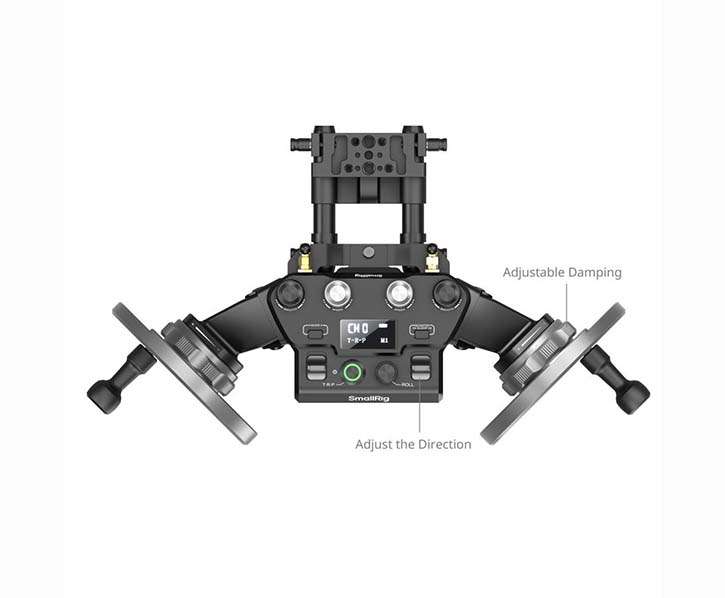
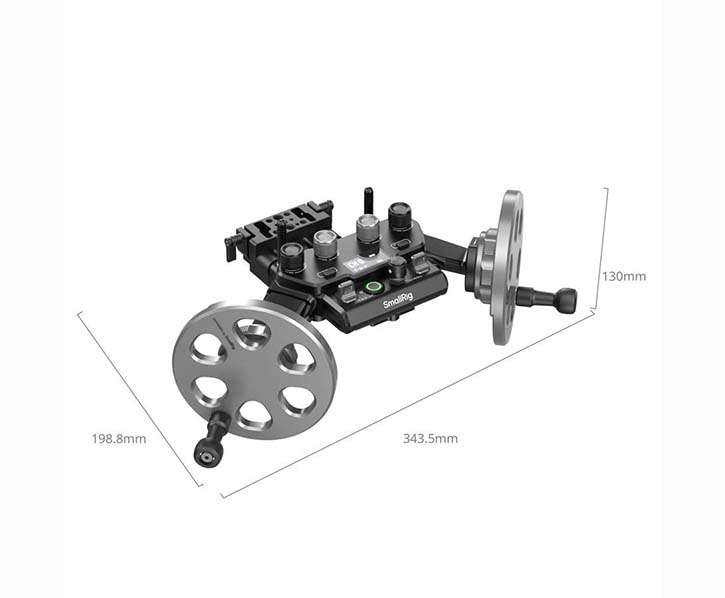
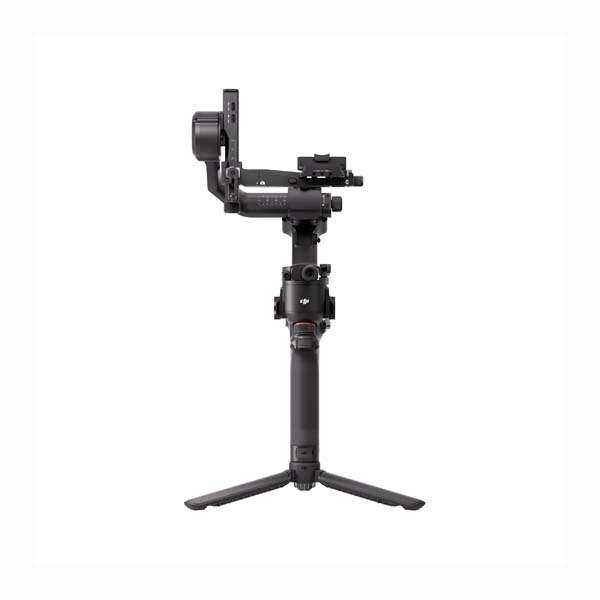
Wireless Remote Gimbal Control System SmallRig 4525 Gimbal Control Wheels turn a DJI RS-series gimbal into a proper remote camera-movement system. Instead of having the camera operator physically control the gimbal, the 4525 gives a second operator dedicated physical controls for the pan, tilt and roll axes, with adjustable speed, smoothness and damping. The system is designed for RS 3 Pro, RS 4, RS 4 Pro, RS 5 and provides a wireless control range of up to approximately 100 metres.
This is particularly useful when a DJI RS gimbal is being used on a crane, jib, vehicle, dolly, slider or other remote camera-movement setup. The gimbal remains on the camera, while the operator works from a separate control position. For a production crew, this changes the way the RS system can be used. A DJI RS gimbal is no longer limited to being something carried by a single operator; it becomes a remotely controlled three-axis camera head.
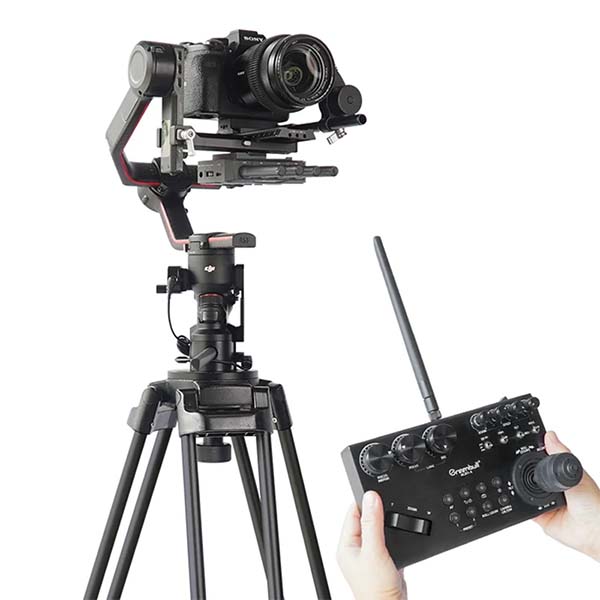
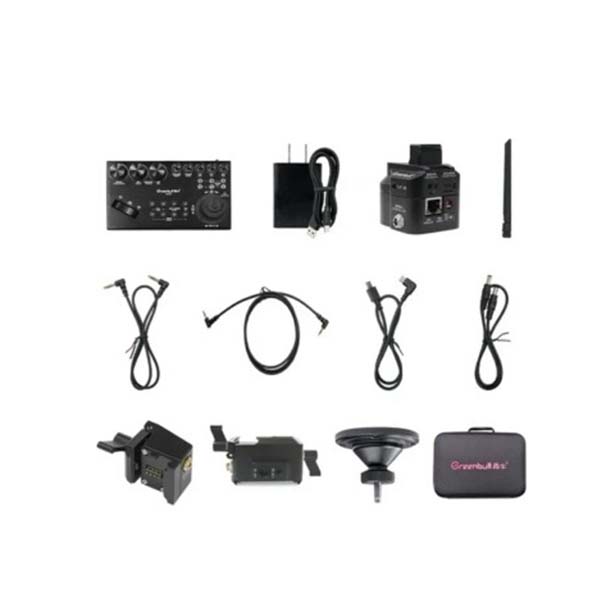
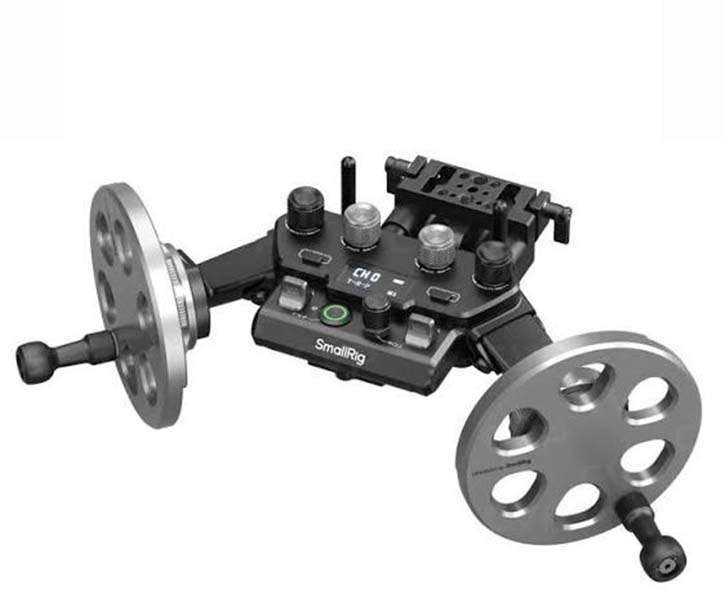
The 4525 uses a dedicated receiver mounted to the DJI RS gimbal and a separate control-wheel unit operated from a tripod or other stable position. The control unit has physical wheels and adjustment controls rather than relying on a touchscreen or joystick. This gives the operator tactile feedback and makes very slow, controlled camera movements much easier to repeat.
The three-axis system can control the gimbal’s pan, tilt and roll movement. The wheel functions can be assigned through the TRP selector, while the controller provides separate adjustments for movement speed, smoothness and damping. The damping control is particularly useful when the shot requires a slow cinematic movement rather than the more responsive behaviour normally used for handheld gimbal operation.
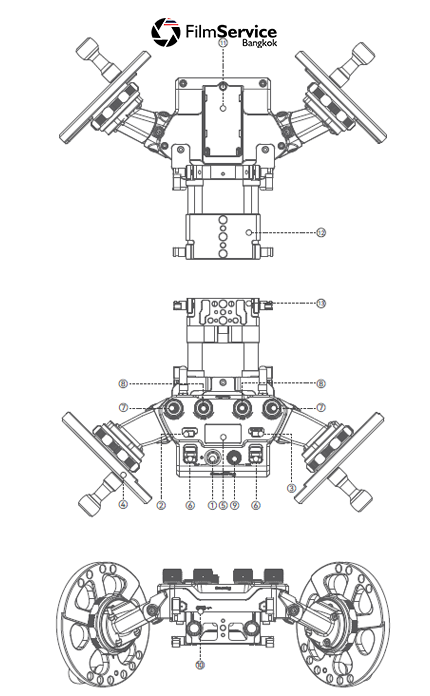
This is where the SmallRig 4525 becomes interesting for professional production. A standard DJI RS setup is very good for a camera operator walking with the camera, but some shots require the camera to move independently of the operator. A crane shot, for example, may require one person to physically move the jib while another person keeps the camera framed on the subject. The 4525 provides that second layer of control without requiring a much larger dedicated remote head.
For Bangkok video production, the system can be particularly useful on commercial shoots where the camera needs to move through a location while the framing is controlled separately. It can also be used for automotive work, music videos, hotel commercials, event coverage and documentary sequences where the camera needs to move around a subject while maintaining precise framing.
The system is also useful with the Teris 26FT Mini Jib in situations where the DJI RS gimbal is mounted at the end of the jib. The jib operator can concentrate on the physical movement of the arm while a separate camera operator controls pan, tilt and roll remotely. This creates a compact two-person camera movement system that can achieve shots normally associated with much larger crane and remote-head setups.
For vehicle work, the same principle applies. The camera can be mounted to a car rig while the control operator works from inside or alongside the vehicle. Because the gimbal movement is controlled remotely, the operator does not need to physically stand beside the camera. This makes the system useful for tracking shots, driving sequences and controlled moving-camera work.
The wireless system provides a stated range of up to 100 metres / 328 feet, although practical range will depend on the shooting environment, interference, physical obstructions and the way the system is installed.
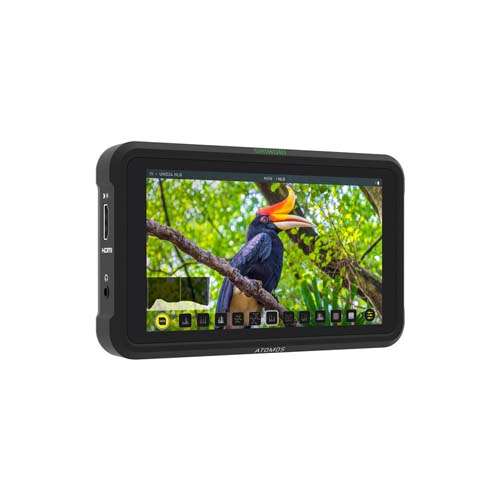
The controller itself weighs approximately 2.76kg, so this is not a small handheld accessory. It is a proper control station designed to be placed on a tripod or other stable support. The unit includes mounting interfaces for additional accessories, including monitor mounts and magic arms, which allows a production monitor or other equipment to be integrated into the operator position.
Power can be supplied through Sony NP-F batteries or USB-C, making it straightforward to integrate into a professional production environment. The controller also includes an OLED display showing operating information and connection status, while the physical controls provide direct access to the main gimbal parameters.
The 4525 is compatible with the DJI RS 2, RS 3 Pro, RS 4 and RS 4 Pro. It is important to note that this system is not designed for the DJI Ronin 4D and should not be confused with DJI’s own remote-control systems or the larger professional remote heads used with cinema cranes.
For filmmakers coming to Thailand, this accessory makes particular sense when a production already has a DJI RS gimbal and wants to expand its capabilities without moving to a completely different remote-head system. Instead of renting a large dedicated head, a camera crew can use an existing RS gimbal with the SmallRig 4525 and build a compact remote camera setup around it.
The system is also useful when the camera package itself needs to remain relatively light. A DJI RS gimbal paired with a compact camera such as a Sony FX3, Sony FX6, Blackmagic camera or other lightweight cinema setup can be considerably easier to deploy on a small jib or vehicle than a traditional heavy remote head and cinema camera package.
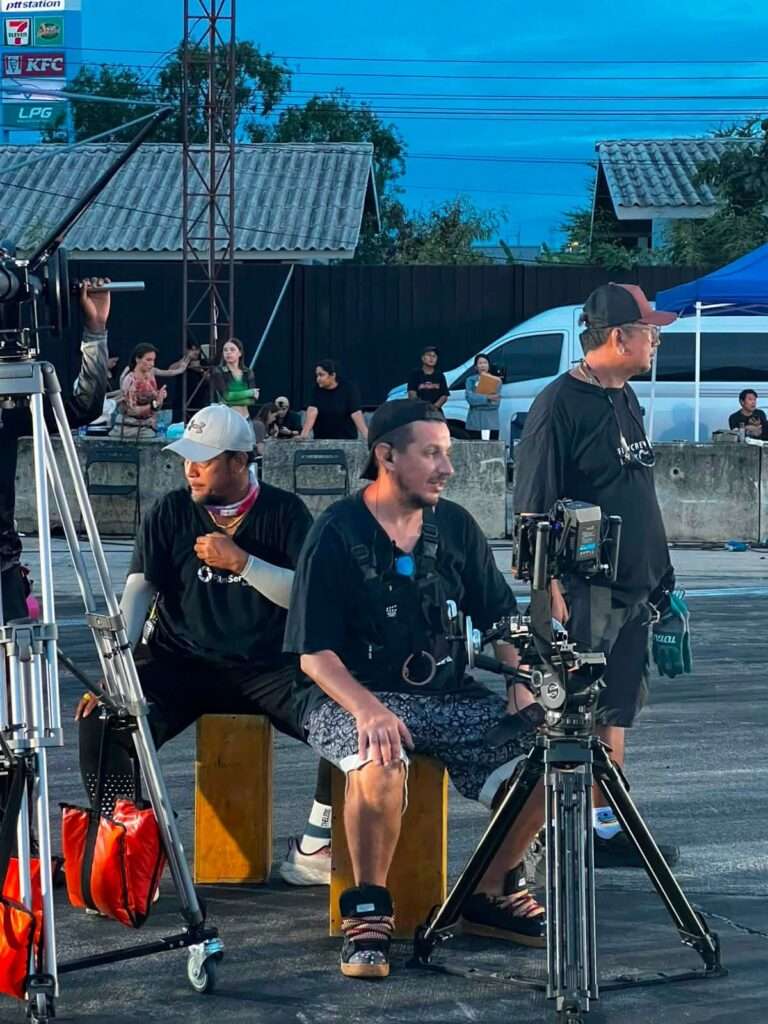
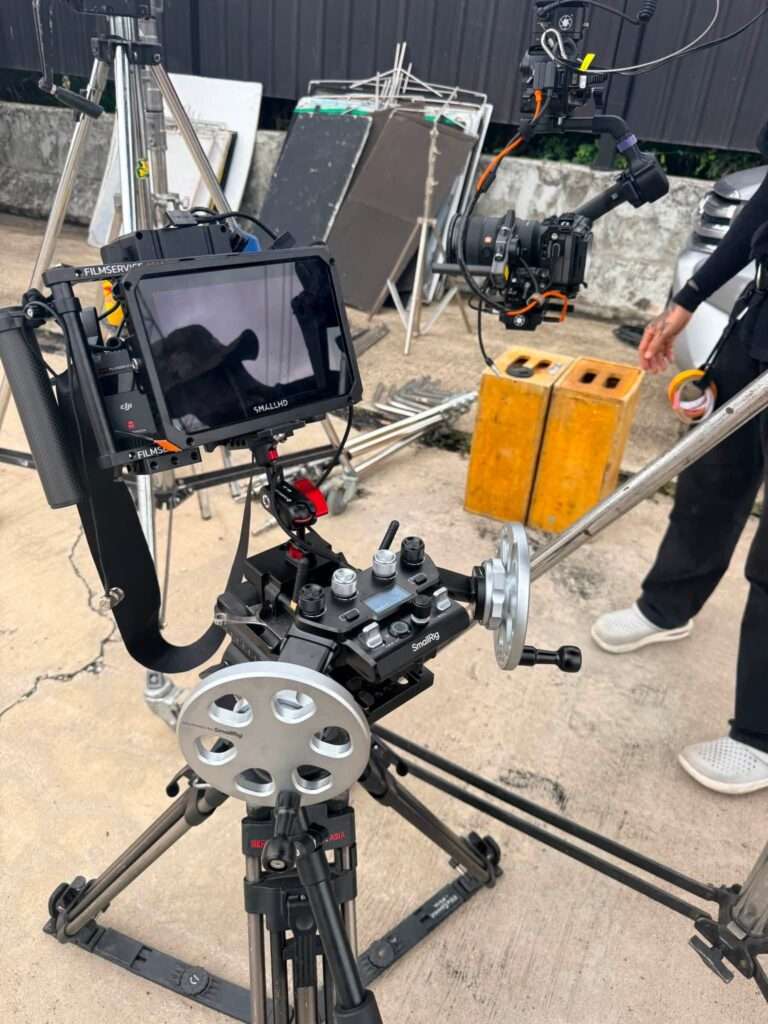
For commercial productions in Thailand, the 4525 is best understood as a camera-movement accessory rather than simply a “gimbal controller.” It adds another operating position to the camera system and allows the crew to separate physical camera movement from framing control. That is the reason to rent it.
Film Service Thailand provides DJI RS gimbals, camera movement equipment, cranes, jibs, cameras, lenses, monitors and grip equipment for productions in Bangkok and throughout Thailand. The SmallRig 4525 can be rented as part of a larger camera movement package when the production requires remote control of a DJI RS-based camera system.
If the shot calls for a camera moving independently on a jib, crane, vehicle or other remote platform, the SmallRig 4525 Gimbal Control Wheels are a practical way of turning a DJI RS gimbal into a much more capable two-operator camera system.