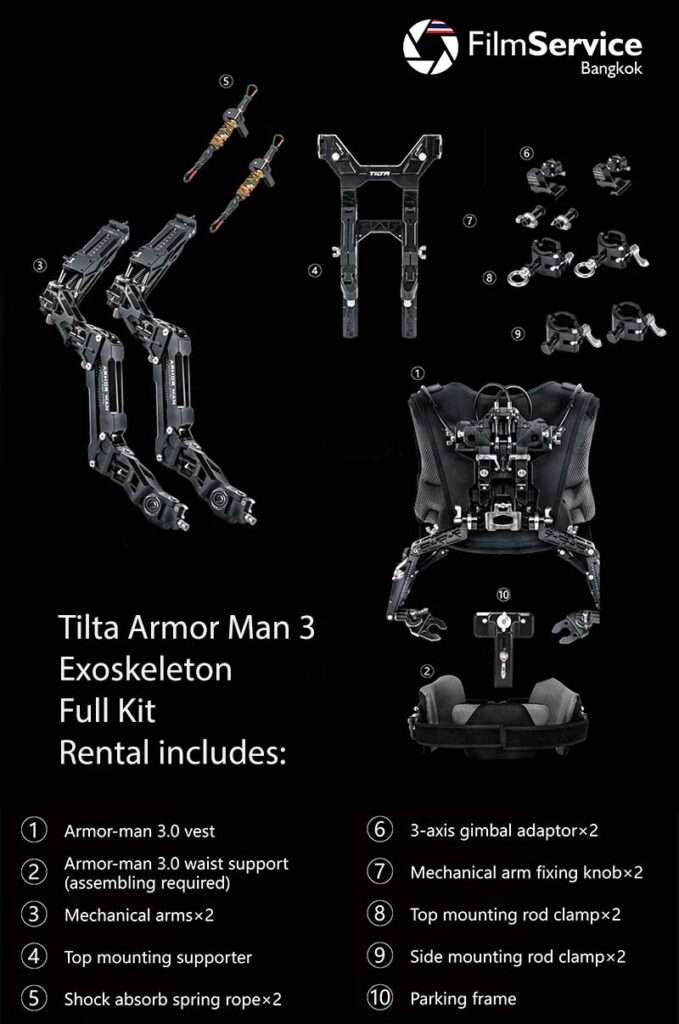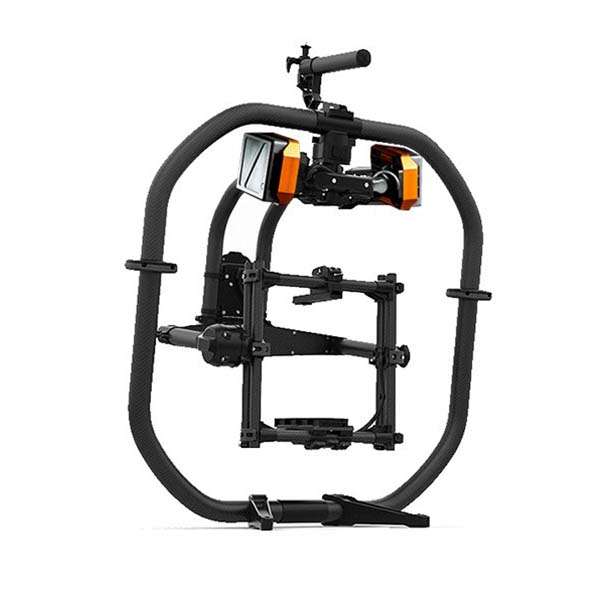
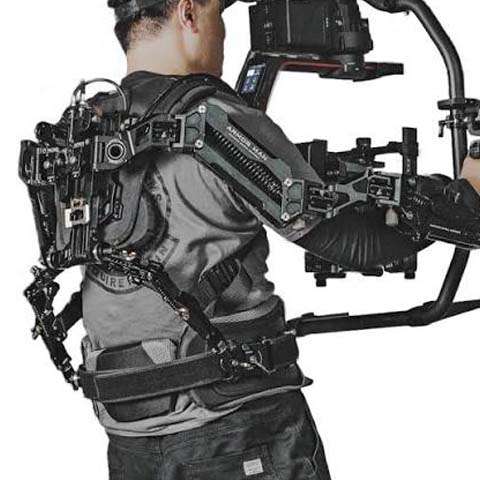
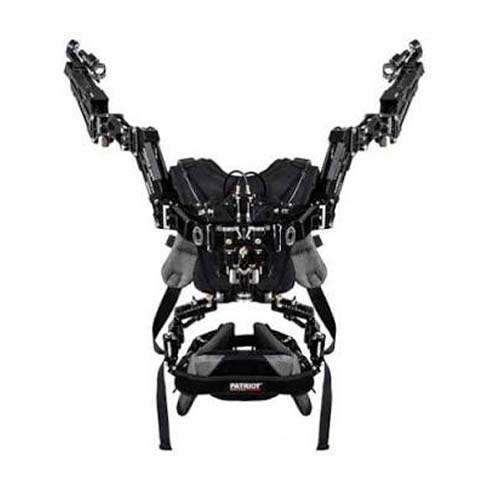
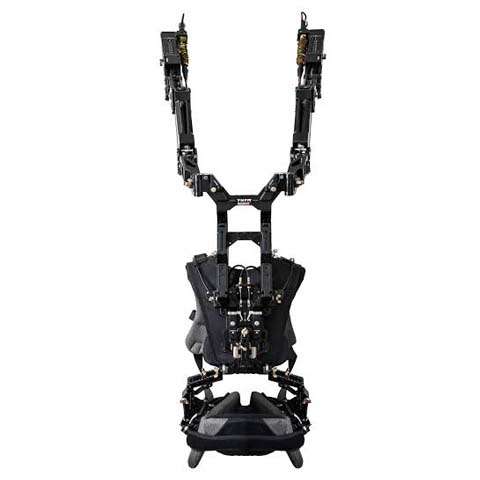
The Tilta Armorman 3.0 is one of those pieces of equipment you appreciate somewhere around the third hour of operating a heavy gimbal. A cinema camera on a DJI Ronin 2 looks beautiful on the call sheet. Then you put the camera on it, add a proper lens, matte box, wireless focus, video transmitter, monitor and batteries, and suddenly the beautiful idea becomes a fairly serious piece of furniture you have to carry with your arms. The Armorman takes a large part of that load away from the operator. The camera is still in your hands and you still operate the gimbal normally, but the weight is transferred through the vest and the two mechanical support arms instead of sitting entirely on your shoulders and forearms.
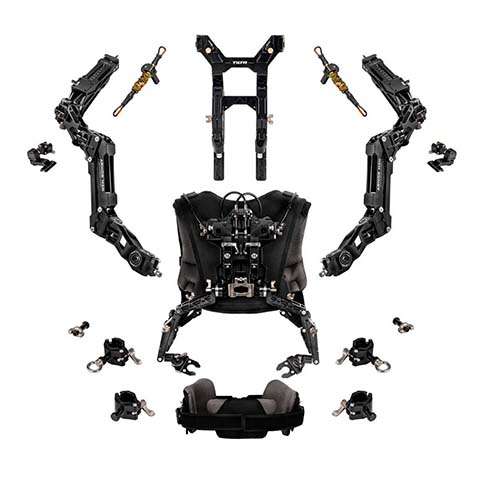
This particular rental package is the full Tilta Armorman 3.0 with the Overhead Kit. So it is not limited to the usual operating position. The support arms can also be configured above the operator, which is useful when the camera has to work at eye level or higher. It is a practical system for heavy three-axis gimbals, especially on commercials, music videos, feature work, long tracking shots and anything where the camera has to stay moving for a long time.
Built for heavy gimbal work
The Armorman 3.0 is designed around a simple problem: a heavy gimbal is manageable for a shot, but becomes a different animal when you have to operate it all day. A fully built cinema camera can easily become a substantial load. The camera itself is only the beginning. Add a large zoom or anamorphic lens, matte box, filters, focus motor, wireless video, monitor, batteries and whatever else the production needs, and the operator is suddenly carrying a complete camera department in front of their body.
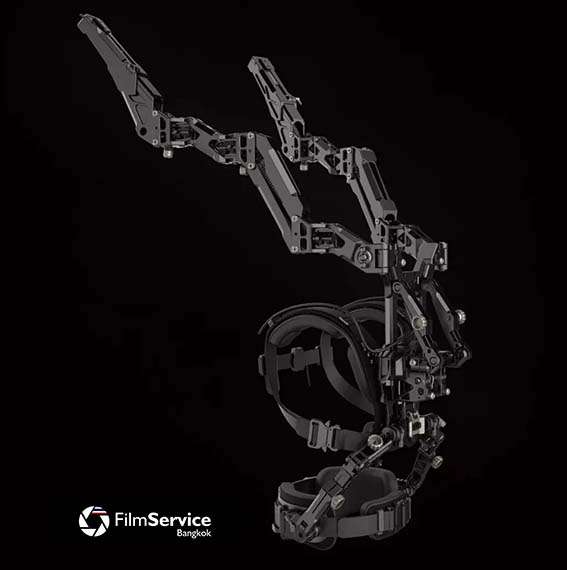
The Armorman does not stabilize the image and it does not replace the gimbal. The Ronin 2, MOVI or other three-axis system is still doing the stabilization. The Armorman is doing the less glamorous but equally important job of supporting the person operating it. The mechanical arms connect the gimbal to the support vest and take much of the physical load away from the operator’s arms. That becomes particularly noticeable on long tracking shots, repeated takes and sequences where the camera cannot simply be put down between setups. The system uses two mechanical arms with adjustable support and shock absorption. Their tension needs to be set for the actual camera package rather than simply for the theoretical maximum payload. That matters more than it sounds.
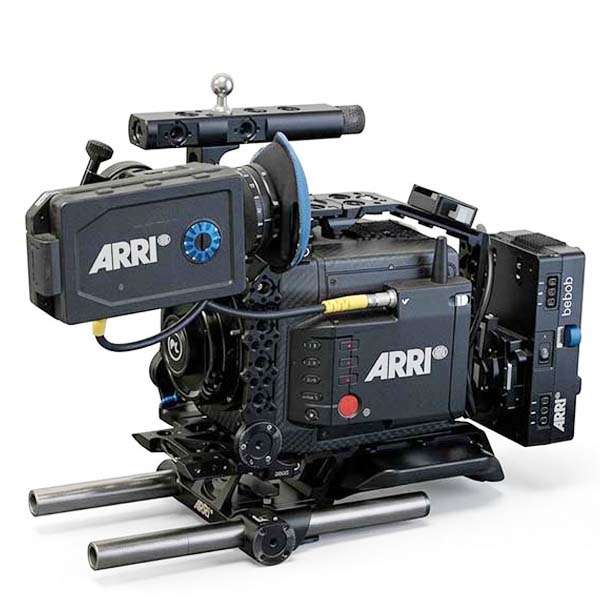
A balanced Alexa Mini with a relatively light prime behaves very differently from a heavy zoom, matte box, wireless focus and full video package hanging off a Ronin 2. The Armorman should be adjusted around the real rig and the operating position you are going to use. According to Tilta’s specifications, the mechanical arms are rated for loads up to approximately 25 kg. That is a useful amount of capacity for a properly built cinema gimbal, but it should be treated as a maximum rather than a target. The complete rig should be weighed, balanced and adjusted before operating.
Normal and overhead operation
In the standard configuration, the arms connect to the rear section of the Armorman vest and support the gimbal from below. The exact connection depends on the gimbal and the adapters being used. The Overhead Kit changes the geometry of the system. The support points are moved to the upper section of the vest, allowing the mechanical arms to work from above.
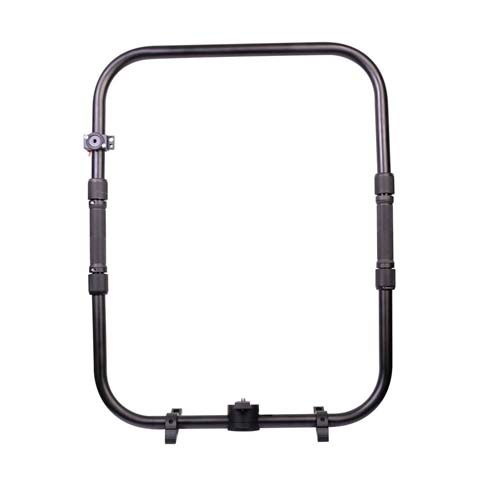
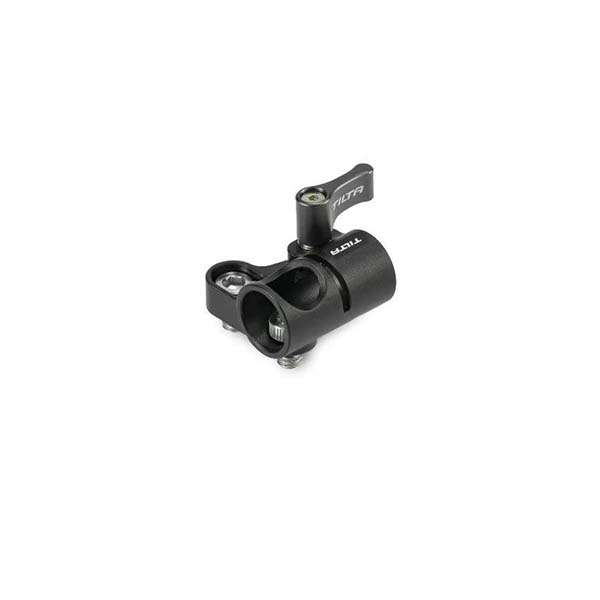
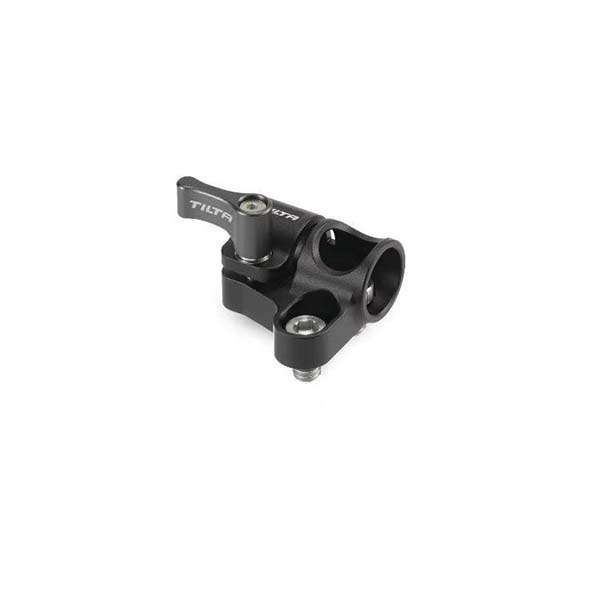
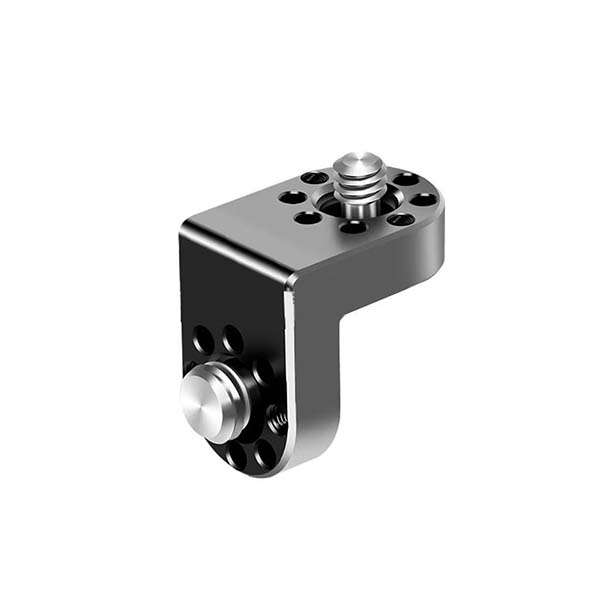
This is useful when you need the camera higher without turning the operator into a human crane. For commercials and music videos in particular, where the camera may move from a conventional operating height into a higher position within the same sequence, having both configurations available is considerably more useful than a support system designed for only one operating position. The overhead configuration uses the dedicated attachment, cable pulleys and ring clamps to connect the mechanical arms to a compatible gimbal ring. The connection can be released through the supplied carabiner and cable system, which makes changing between setups much less painful on a busy shooting day.
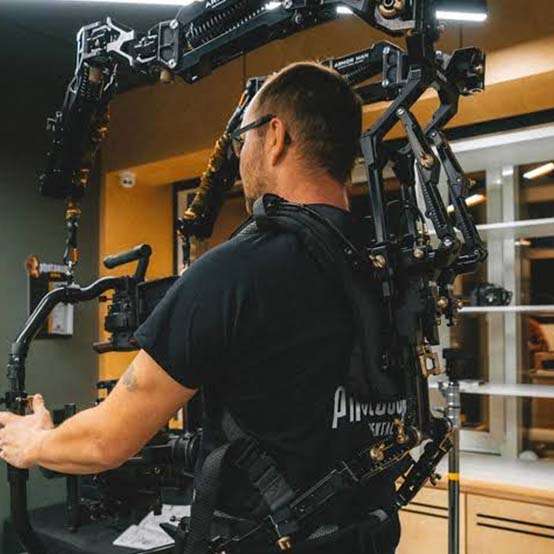
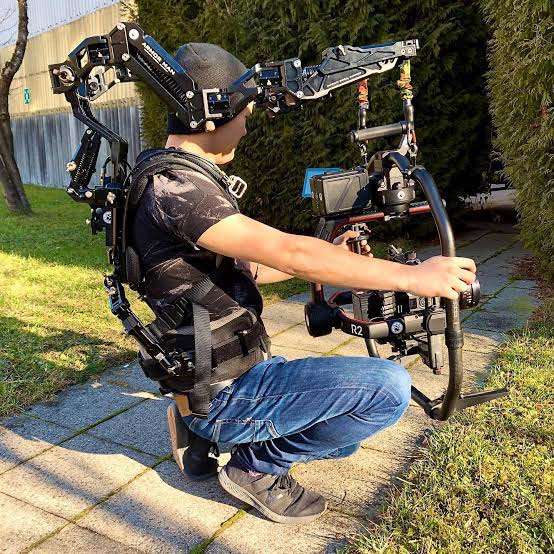
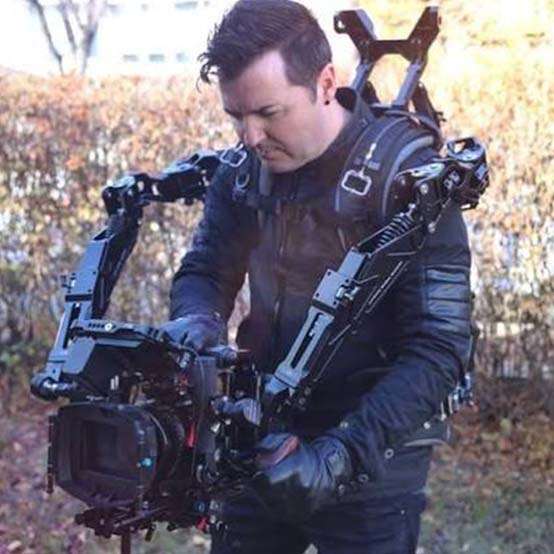
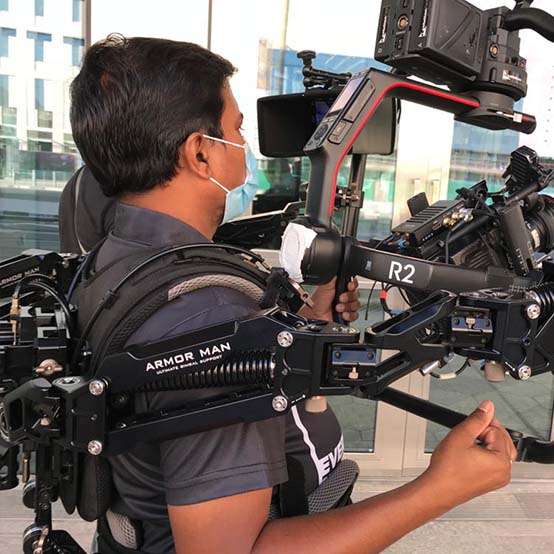
Ronin 2, MOVI and other professional gimbals
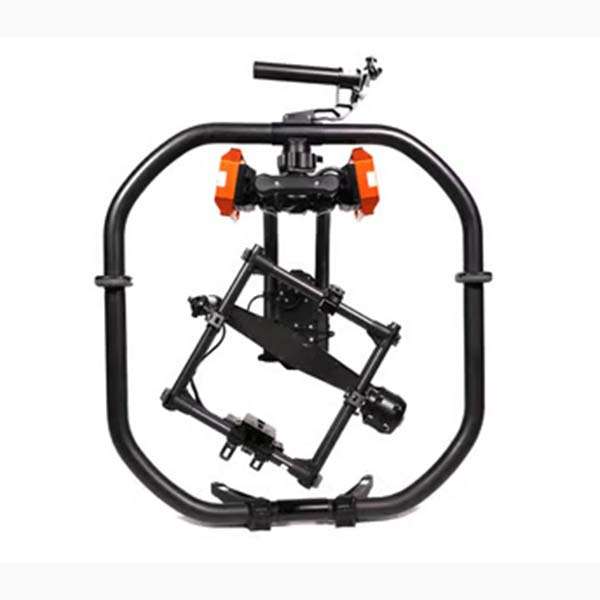
The Armorman is not tied to one particular camera package. With the appropriate adapters and mounting hardware it can be used with professional ring-based and top-bar gimbal configurations.
That includes DJI Ronin 2 and compatible Freefly MOVI systems.
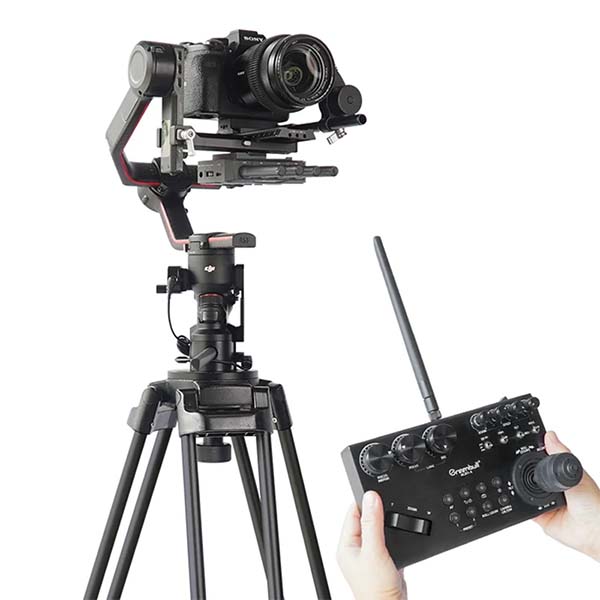
Ronin 2 is a particularly obvious match because it is often used with exactly the sort of camera package that makes an operator start looking for mechanical assistance: cinema camera, large lens, matte box, wireless focus, video transmission and a serious battery setup.
The Armorman sits between the operator and the gimbal. It does not change how the Ronin 2 is operated. You still control the camera exactly as you normally would; you simply don’t have to carry all of its weight with your arms.
The same principle applies to compatible MOVI configurations. Because mounting hardware can vary between gimbals, it is worth checking the complete camera and gimbal package before the shoot.
Where it actually makes sense
The Armorman is not something you put on a camera just because the catalogue says “professional”. It earns its place when the camera has to keep moving.
A long tracking shot through a hotel. Following talent through a restaurant. A music video where the same choreography is repeated ten times. A commercial where the camera has to travel with a vehicle and then continue on foot. A feature sequence with long takes and very little opportunity to put the rig down. These are the situations where the difference becomes obvious. Without support, fatigue slowly changes the way the operator works. Camera height starts to move, framing becomes harder to maintain and the last takes are rarely as comfortable as the first ones. The Armorman does not make a 25 kg camera disappear. You still have to operate it, move with it and think about the shot. It simply moves a significant part of the static load into the mechanical support system, leaving the operator to concentrate on the camera.
Armorman vs. Easyrig
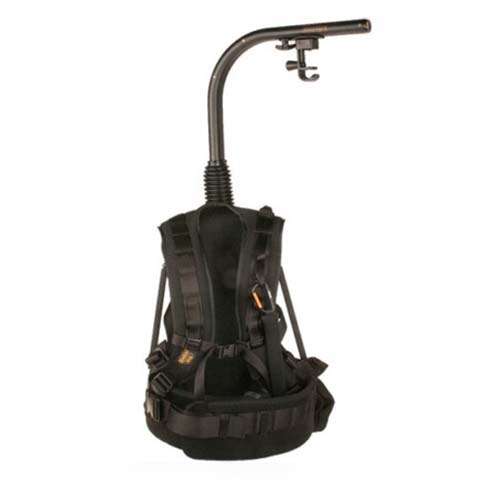
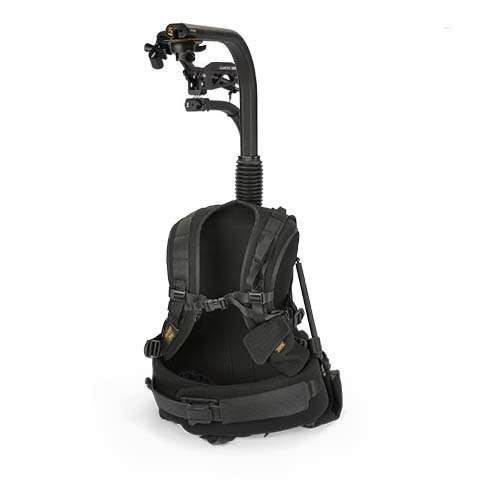
The Armorman and an Easyrig solve related but different problems. An Easyrig suspends the camera from above and transfers the load through the operator’s body. It is extremely useful for handheld and certain gimbal configurations. The Armorman uses mechanical arms connected directly to the gimbal. That makes it particularly interesting for heavy three-axis systems where the operator needs to keep the camera in a controlled position while moving. Neither system is universally “better”. They are different tools for different rigs and different operating styles. If the production is built around a DJI Ronin 2 or another large professional gimbal, the Armorman is a very logical piece of support equipment to consider.
Practical rental setup
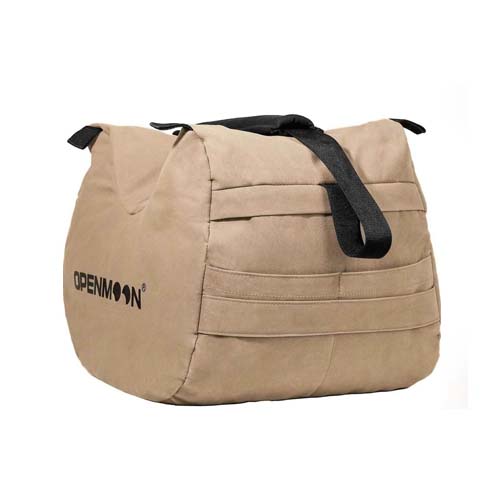
The system is designed to stay on the operator between takes. The gimbal can be disengaged from the arms when necessary without rebuilding the entire vest every time the camera stops. That sounds like a small thing until you have a full day of commercial setups and realise how many times a camera operator has to put down, pick up, connect and disconnect the same equipment. The full set comes with the components required for the standard and overhead configurations, together with the transport cases and bags for the system. Film Service Thailand rents the Tilta Armorman 3.0 Full Set with Overhead Kit for professional productions in Bangkok and across Thailand. It can be rented as part of a complete gimbal package with DJI Ronin 2 or compatible systems, together with ARRI, RED, Sony and other cinema cameras, professional lenses, wireless focus, wireless video and monitoring. For a heavy camera that has to stay in the operator’s hands all day, the Armorman is a fairly simple proposition: don’t make the operator carry the entire camera package with their arms if the mechanical system can do part of the work. That is what this piece of equipment is for.