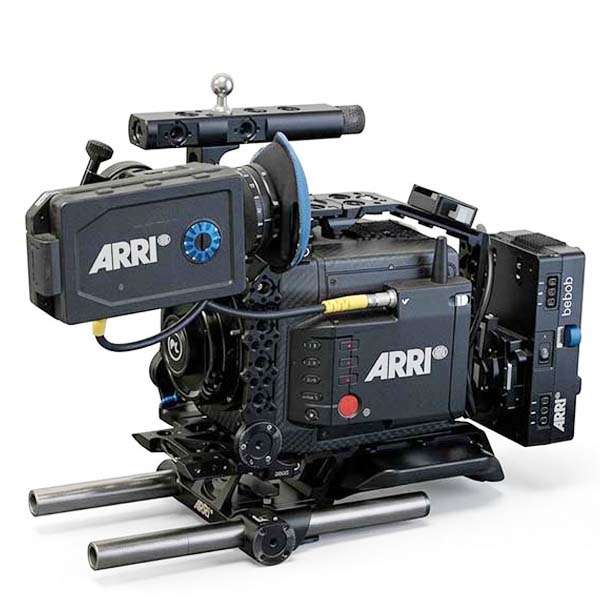
ARRI ALEXA MINI LF — WHY THE ALEV III GENERATION STILL MATTERS
There are cameras that become popular because their specification sheet looks impressive, and there are cameras that quietly become part of the language of cinematography. The ARRI ALEXA Mini LF belongs to the second group. It arrived at a very interesting point in the development of digital cinema. Large-format acquisition was becoming increasingly important, streaming productions were moving towards higher-resolution masters, lens manufacturers were building new large-format families, and cinematographers were looking for more than simply another camera with more pixels. They wanted the familiar ALEXA image, but on a larger sensor, in a body that could actually be carried through a location, mounted on a gimbal, put on a Steadicam or balanced on a crane without turning the camera department into a construction project.
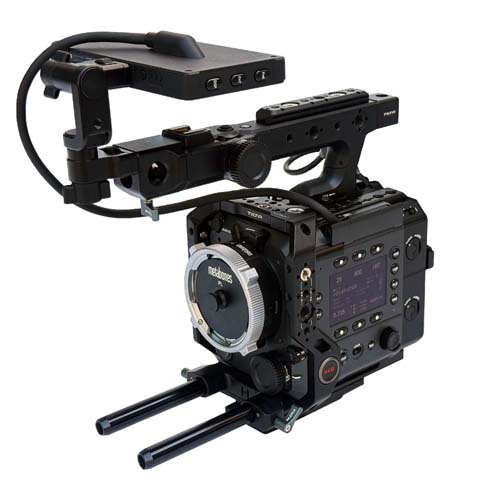
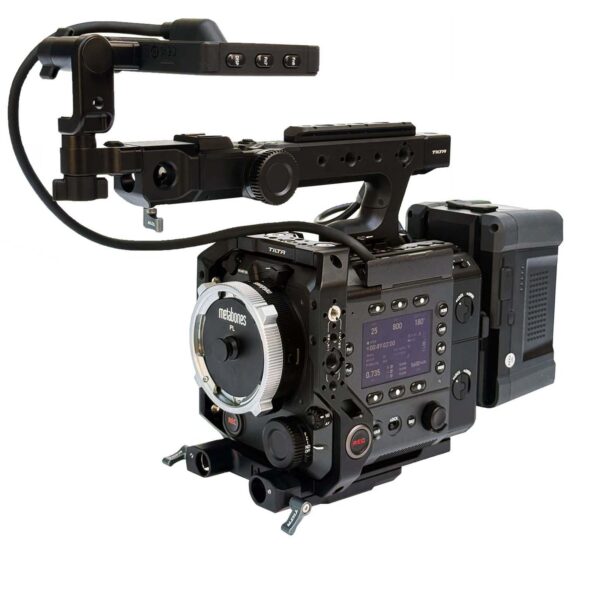
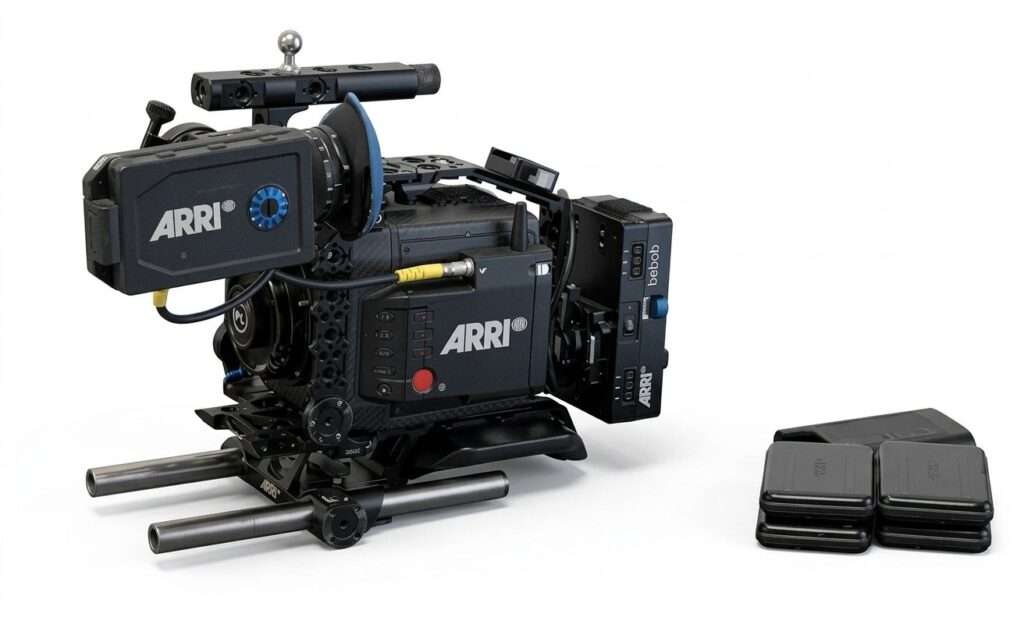
That is essentially where the ALEXA Mini LF found its place. It combines ARRI’s large-format ALEV III A2X sensor with a compact cinema camera body, giving cinematographers the large-format image associated with the ALEXA LF while keeping the camera practical for real-world production. And there is another reason the Mini LF remains interesting today: a significant number of cinematographers still have a particular affection for the image produced by the ALEV III generation of ALEXA cameras. That preference is not simply nostalgia.
WHY CINEMATOGRAPHERS STILL TALK ABOUT ALEV III
The history of the ALEXA is important because the camera’s reputation was never built around having the highest resolution on the market. ARRI took a different approach.
Instead of treating the camera as a competition for the largest number of pixels, the ALEXA system was developed around the behaviour of the image — dynamic range, highlight handling, colour reproduction, skin tones and the way the sensor responds when the exposure is no longer perfectly controlled. The ALEV III generation became extremely familiar to cinematographers because it was used on an enormous number of feature films, television productions, commercials and music videos. Over time, operators learned exactly how it behaved. They knew what happened when a face moved towards a window, how a practical light would roll into clipping, how skin would react under mixed colour temperatures and how much could be recovered in the grade without the image suddenly feeling synthetic. This is one of the less obvious reasons why experienced cinematographers can remain attached to a particular sensor generation. A sensor is not simply a resolution device. It is part of the way light is translated into an image. And once a cinematographer has spent years working with a particular image response, that response becomes part of their visual vocabulary.
THE DIFFERENCE BETWEEN MORE DETAIL AND A BETTER IMAGE
Modern cinema cameras can produce an extraordinary amount of information. That is obviously useful, but resolution by itself does not determine whether an image feels cinematic. A close-up of a face is a good example. A camera can resolve every small detail of skin texture, eyelashes and fabric, but the resulting image may not necessarily feel more pleasing. Sometimes the cinematographer wants exactly that level of definition. Sometimes it is the opposite. This is one reason why some operators describe newer-generation cameras as having a more modern or more digital character compared with the familiar ALEV III image. That does not mean that a newer sensor is technically worse. It means that the visual response is different. The ARRI ALEXA 35 is a good example. Its modern Super 35 sensor offers extremely impressive performance and a very different set of possibilities, but the resulting image does not simply look like a higher-resolution version of an older ALEXA. It has its own character. Some cinematographers like the additional crispness and contemporary rendering. Others may prefer the more familiar ALEV III look when shooting faces, dramatic scenes, fashion or commercial work where the image needs to retain a certain amount of softness and natural texture. This is not really a question of which camera is better. It is a question of what the cinematographer wants the audience to see.
THE MINI LF AND THE LARGE-FORMAT IMAGE
The ALEXA Mini LF uses ARRI’s ALEV III A2X large-format sensor with an image area of 36.70 × 25.54 mm and 4448 × 3096 photosites in Open Gate. The sensor uses 8.25 μm photosites and follows the same general imaging philosophy that made the ALEXA platform so widely adopted. The important part is not simply that the sensor is larger. Large format changes the relationship between the camera, lens, subject and background. With the larger sensor, a cinematographer can use longer focal lengths for a comparable field of view than on Super 35. This creates different possibilities for perspective, subject separation and background rendering. A 50mm lens is no longer simply a “50mm lens” in terms of how it is used creatively. The format changes the way that focal length participates in the composition. This becomes particularly interesting with close-ups. Large-format acquisition allows the cinematographer to isolate a face from the background while still retaining a strong sense of the environment around the subject. The background does not necessarily have to disappear into a completely abstract blur. It can remain recognisable, but fall away naturally from the plane of focus. That distinction is particularly useful in narrative cinematography, fashion, automotive work and advertising.
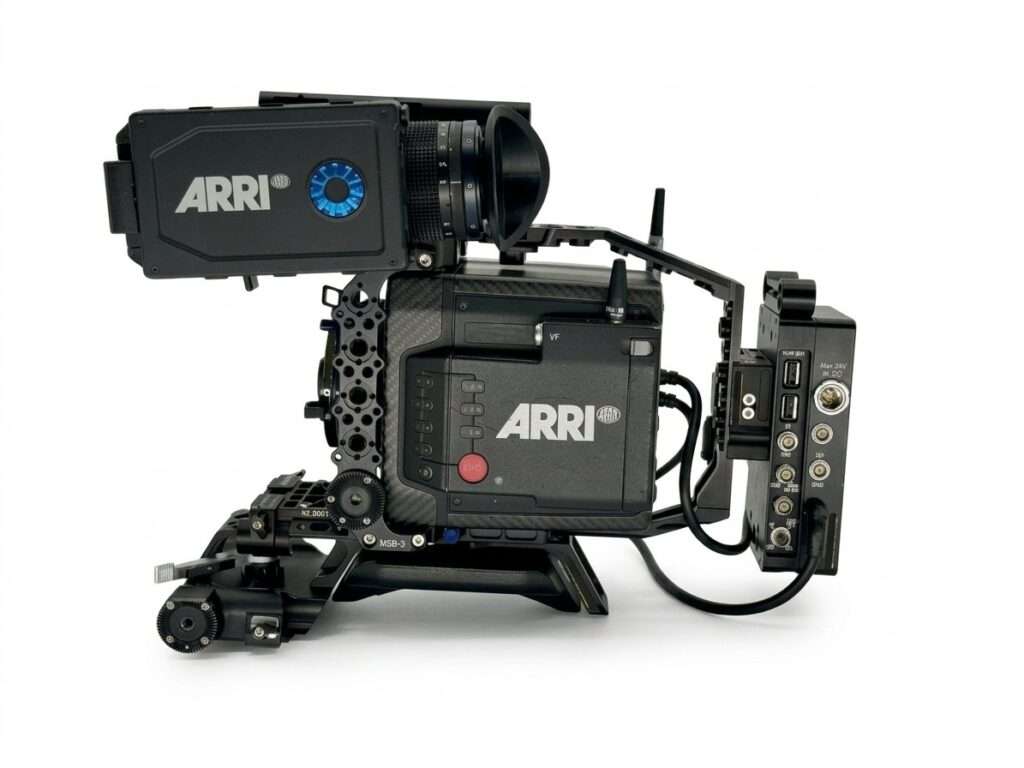
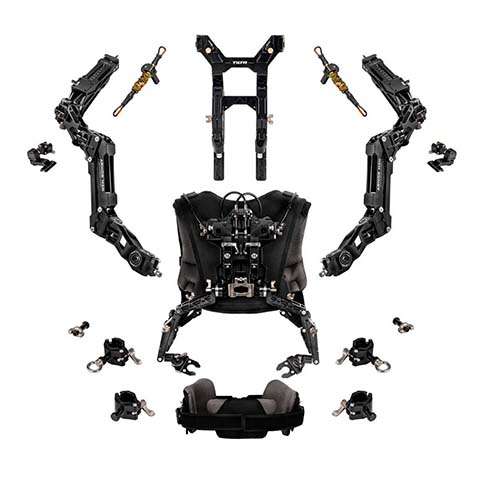
The ALEXA LF established the large-format ALEXA concept, but the Mini LF brought that image into a much more practical camera package. The Mini LF body with LPL mount weighs approximately 2.7 kg, which makes a significant difference when the camera has to move. A large -format camera that works beautifully on a tripod is useful. A large-format camera that can move from tripod to handheld, Steadicam, gimbal, crane or remote head without completely rebuilding the production is considerably more useful. That is where the Mini LF becomes more than a smaller version of the ALEXA LF. Its physical design allows the cinematographer to build a camera around the requirements of the shot rather than designing the shot around the size of the camera. On a commercial, for example, the camera may begin on a tripod for a controlled product shot, move onto a gimbal for a tracking shot and then be rebuilt for handheld work later in the day. On a feature, the same camera may go from a dolly to Steadicam and then into a vehicle rig. The image remains within the same large-format ALEXA system.
LPL, PL AND THE IMPORTANCE OF THE LENS
The ALEXA Mini LF uses ARRI’s LPL mount, developed specifically for large-format cinematography. LPL lenses provide the image circle required by the large-format sensor and give cinematographers access to ARRI’s modern large-format lens ecosystem. At the same time, PL cinema lenses can be used with the appropriate PL-to-LPL adapter. For a rental camera package, this flexibility is extremely useful because it means the Mini LF does not force a production into one particular lens family. A cinematographer may choose modern large-format lenses when a clean and controlled image is required, classic PL glass when a more familiar cinema rendering is preferred, or vintage and anamorphic lenses when the optical character itself becomes part of the visual language. And this is where the discussion becomes much more interesting than simply comparing camera specifications. The same Mini LF can produce radically different images depending on the lens, filtration, lighting and exposure strategy. The sensor is only one part of the picture.
THE ART OF USING THE SENSOR RATHER THAN FIGHTING IT
One of the mistakes often made when discussing large-format cameras is assuming that the entire point is to shoot everything wide open and make the background disappear. That is certainly one possibility. It is not the only one. Large format gives the cinematographer more control over the relationship between focal length, camera distance, aperture and depth of field. You can use the format for very shallow focus, but you can also stop down and retain more of the environment while still getting the characteristic large-format separation. This is particularly valuable in narrative cinematography. A character can remain clearly separated from the background without turning the location into an unrecognisable wash of blur. For a cinematographer, that is a much more interesting use of large format than simply saying “look how shallow the depth of field is.” The format becomes a tool for controlling space.
Commercial work is where the Mini LF can become particularly interesting because the camera can respond to very different visual requirements without changing its fundamental image platform. Automotive cinematography benefits from the combination of large-format rendering and controlled cinema lenses. Reflections across bodywork, metallic surfaces, glass and paint can be photographed with a great deal of subtlety. Fashion benefits from the way large-format lenses can separate a subject while maintaining a recognisable environment. Beauty and cosmetics require a more careful approach. In this situation, the goal is not necessarily maximum sharpness. The cinematographer may deliberately combine the ALEXA image with specific lenses, diffusion and soft lighting to retain natural skin texture while maintaining enough detail for a high-end commercial finish. Luxury products are another example. A watch, a piece of jewellery, a bottle or a piece of industrial design needs texture and dimensionality, but the image should not feel like a technical demonstration of the camera sensor. The camera should disappear. The object should remain.
ALEXA 35 AND MINI LF — DIFFERENT TOOLS, DIFFERENT IMAGES
The ALEXA 35 and ALEXA Mini LF should not be treated as two generations where one simply replaces the other. They are different tools. The ALEXA 35 brings a modern Super 35 approach with a newer sensor architecture, high image quality and a very flexible contemporary workflow. The Mini LF takes the ALEV III A2X approach into large-format cinematography. For some projects, the clean and highly resolved character of the ALEXA 35 is exactly what the cinematographer wants. For others, the combination of large-format optics and the familiar ALEXA rendering of the Mini LF may be more appropriate. There are also productions where the two approaches can coexist. A camera choice should follow the visual requirements of the project rather than the age of the sensor. If the project needs a modern, highly detailed Super 35 image, ALEXA 35 is an obvious tool to consider. If the project is built around large-format lenses, strong subject separation and the familiar ALEXA image response associated with the ALEV III generation, Mini LF becomes a very compelling option.
The ALEXA Mini LF records ARRIRAW and Apple ProRes to Codex Compact Drives, providing different workflow options depending on the production. LF Open Gate records 4448 × 3096 photosites across the full 36.70 × 25.54 mm sensor area. The camera also provides LF 2.39:1, LF 16:9 and Super 35 recording options, allowing productions to choose a format that fits the project and post-production workflow.
For productions working with a high-end finishing pipeline, ARRIRAW provides the maximum flexibility for post-production. For commercials, branded content, television and other projects where a more straightforward workflow is preferred, ProRes can provide a practical solution without turning the entire production into a data-management exercise. Again, the important point is flexibility. The Mini LF can work as a serious cinema camera at the highest level of production, but it does not require every project to adopt the same workflow.
INTERNAL ND FILTERS FOR REAL PRODUCTION
The Mini LF includes an internal motorised Full Spectrum Neutral Density filter system with clear, ND 0.6, ND 1.2 and ND 1.8 positions. That means the cinematographer can control exposure internally while maintaining the selected lens and camera configuration, rather than constantly rebuilding a matte box and changing external filters whenever the lighting situation changes. On a controlled set this is convenient. On location it can be even more important. A production day in Thailand may move from an interior to direct sunlight, from a shaded street to an open beach, or from a controlled location into a vehicle sequence, sometimes with very little time between setups. The ability to manage exposure inside the camera can make those transitions considerably faster.
Thailand is a good example of where the practical advantages of the Mini LF become obvious. A production may start in Bangkok and move to Phuket, Chiang Mai, Koh Samui or another location where transport, weather, access and crew movement become part of the cinematography problem. The camera may need to work in a studio in the morning, on a street in the afternoon and on a beach or in a remote location the next day. A camera package that remains relatively compact while still providing a true large-format cinema image has a very practical advantage in these conditions. The Mini LF can be configured for tripod, handheld, Steadicam, gimbal, crane, vehicle work or remote operation, and the lens package can be built around either LPL or PL cinema glass. For productions shooting across Thailand, that flexibility matters. The camera does not need to be the biggest piece of equipment on the set to produce a large-format image.
THE CAMERA SHOULD NOT BECOME THE SUBJECT
There is a strange paradox in modern cinematography. The more technically advanced cameras become, the easier it is to become obsessed with the technology itself. Resolution, dynamic range, sensor size, codecs, frame rates, rolling shutter, pixel counts — all of these things matter, but none of them is the image by itself. The cinematographer still has to decide where the camera goes. Which lens. How much light. How much shadow. How much detail. How much separation. How much of the location should remain visible. And, perhaps most importantly, what the audience is supposed to feel when the shot appears on screen.
The ALEXA Mini LF remains relevant because it gives the cinematographer a combination that is difficult to reduce to a specification sheet: the large-format ALEXA image, a compact cinema body, a mature production workflow and access to an enormous range of cinema lenses. It is not trying to prove that it has the newest sensor. It does not need to. For many cinematographers, the attraction is precisely that the technology has become familiar enough to disappear. You can concentrate on the light, the lens, the movement and the performance. And when everything is working properly, the audience never thinks about the sensor at all. They simply see the film.
RENT ARRI CAMERAS FROM FILM SERVICE THAILAND
At Film Service, we come from the camera department. We are not simply a rental house with a catalogue of equipment. We shoot as well, work on real productions and use much of our own equipment in our own projects, so we know what happens when the camera has to survive a twelve-hour shooting day, when a lens needs to be changed quickly, when a gimbal build suddenly has to become a handheld setup, or when you discover on location that the piece of equipment you thought you needed is not actually the piece of equipment that will solve the problem. That experience shapes the way we build our rental packages.
We are a “one-stop” destination for all kinds of shoots, carrying a comprehensive range of stills and motion cameras, cinema lenses and accessories, lighting, grip and camera support equipment, at rates that make sense for real productions. Our mission is to work side-by-side with professional filmmakers and help them make great films, rather than simply hand over a case of equipment and leave you to figure everything out yourself. We use our equipment for our own productions, and we are happy to share it with other filmmakers working in Thailand.
Whether you are shooting a feature film, commercial, music video, documentary, fashion film, branded content or a small independent project, we understand that the right equipment is not necessarily the most expensive equipment. It is the equipment that makes sense for the shot, the crew, the location and the way you actually work. That is why we are always happy to talk through the camera, lens, lighting and support package before the shoot.
We know the equipment because we use it. And we are here to help you use it to make something worth watching.